



The LiT List
Glamping & Camping Ideas + Resources
Waterproofing A Canvas Tent - Retreating Canvas
Canvas tents are beautiful, comfortable, and durable even in tough weather conditions. Cotton canvas is naturally breathable and highly water resistant, but no water-repellent treatment lasts forever. After extended exposure to sun, rain, cleaning, and everyday use, canvas may eventually need to be reproofed.
In this article, we'll cover when and why you may need to waterproof canvas tent, how to tell when it's time for treatment, which products can be used, and how to reproof your canvas so it continues to perform well in wet weather.
Key Takeaways
Yes, a properly treated cotton canvas tent is waterproof in normal rain, but no treatment lasts forever. Season untreated canvas by wetting and drying it, check whether water still beads, and rule out condensation before treating. When it's time to reproof, apply a canvas waterproofer like Dry Guy on a dry, warm day and let it fully cure.
Jump to
- Are canvas tents waterproof?
- Why reproofing matters
- Tent seasoning
- Waterproofing products
- How to waterproof a canvas tent
- Check for leaks first
Related: Preventing Condensation in a Tent · Why Is Water Getting in My Bell Tent? · Canvas Tent Care in Humid Climates · Shop tent repair & care
Are Canvas Tents Waterproof?
Yes. A properly treated cotton canvas tent is designed to keep you dry in normal rainy conditions while still allowing the fabric to breathe.
Cotton fibers also swell slightly when wet, helping tighten the weave and areas around stitching. Over time, however, weather exposure and cleaning can reduce the effectiveness of the tent's water-repellent treatment. That's when reproofing may become necessary.
Why Reproofing and Waterproofing Canvas Bell Tents Is So Important?
 Natural cotton fibers allow canvas to be both breathable and highly water resistant. Over time, however, prolonged exposure to UV, rain, weather, and cleaning can reduce the effectiveness of the canvas's water-repellent treatment.
Your canvas tent can also be damaged by moisture over long periods of time. Even if the inside is dry, water seeping into tiny holes within the canvas can host mold and mildew that slowly degrade your tent, especially if it is packed while still damp.
Additionally, waterproof canvas tents don’t stay waterproof forever. If you want to keep your tent damage-free over several years, regular reproofing needs to be a part of your canvas tent maintenance. In other words, even if you buy a tent that is waterproof, knowing how to waterproof a canvas tent will help you make the most out of your purchase.
How often should I reproof my canvas tent in order to keep it waterproof?
The frequency you should reproof your tent is determined by the type of waterproofing product used, how often you use your tent, and the climate(s) it is exposed to. Lastly, protective gear like fly covers can reduce the frequency you need to reproof canvas tents, such as wall tents and bell tents.
You can use a simple visual test to know if it's time to reproof your tent. If water still beads up and rolls off the canvas, the existing treatment is doing its job. If water begins soaking into and darkening the canvas instead, it may be time to reapply a waterproofing treatment.
As a general rule, you should aim to reproof your tent at least once a year if you don't use it often, and three times a year if you use it continuously. The image below can help you determine how often you should reproof your tent each year based on regional climate:

Natural Water Repellence: Tent Seasoning
Tent seasoning refers to the process of thoroughly wetting and drying untreated cotton canvas. When cotton fibers get wet, they swell slightly, helping tighten the fabric's weave and the areas around seams and needle holes.
For an untreated canvas tent, seasoning can be as simple as setting the tent up properly, thoroughly wetting it with a garden hose or rainfall, and allowing it to dry completely. The process may be repeated if recommended by the tent manufacturer.
Seasoning can improve the natural water resistance of cotton canvas, but it isn't the same as reproofing an older tent whose water-repellent treatment has worn down. And no amount of seasoning or waterproofing makes it safe to pack or store canvas while damp.
Waterproofing Products for Canvas Tents
If you want your tent to be waterproof, your best bet is to purchase a canvas waterproofing solution or canvas waterproofing spray. Here are our top three picks that we recommend for canvas tent treatment:
- Dry Guy Waterproofing Concentrate -This waterproofing treatment is designed for outdoor fabrics, including canvas tents. The concentrate must be diluted before use, so follow the manufacturer's mixing and application instructions.
- Hawk Tools Canvas Waterproofer - With an easy roll-on application and a non-toxic formula, this solution is great for those looking for a very effective, durable & environmentally-friendly canvas waterproofing treatment. You will likely need to drop your tent to treat the peak.
- 303 Fabric Guard. - 303 Fabric Guard is designed to restore water repellency to natural and synthetic outdoor fabrics while maintaining breathability. Apply it to clean, dry fabric and follow the manufacturer's application and safety instructions.
How to Waterproof a Canvas Tent?
Follow these steps to make a canvas tent waterproof:
For best results, choose a stretch of dry, preferably warm weather. Your tent should be completely dry before treatment, and you'll also need enough dry weather afterward for the waterproofing product to dry or cure according to the manufacturer's instructions.
- If your tent needs to be cleaned, remove dirt, debris, or mildew before applying a waterproofing treatment. Use a cleaning method appropriate for cotton canvas and avoid unnecessarily harsh detergents or aggressive scrubbing. For tips on deeper cleaning, check out our tent cleaning article.
- Prepare your waterproofing treatment. Depending on which product you chose, you may need to dilute it or follow other specific instructions before applying.
- Apply the waterproof treatment. This will either be by spraying your canvas tent with it or painting it with a roll-on brush (depending on the brand).
- Evenly apply the treatment following the manufacturer's instructions. Depending on the product, you may use a sprayer, brush, sponge, or roller to make sure the canvas is covered consistently.
- Allow your tent to dry completely.
- Test. After the treatment has fully dried or cured, test a small section with water. If water beads up and rolls away, the treatment is working. Spot-treat any areas that still absorb water if needed.
Before Reproofing, Make Sure the Canvas Is Actually Leaking
Moisture inside a canvas tent doesn't always mean rain is passing through the canvas. Condensation can create a surprising amount of moisture during cool, humid, or foggy conditions, and water can also enter through windows, vents, zippers, or other openings.
If water still beads normally on the outside of the canvas but you're finding moisture inside, identify the source before waterproofing the entire tent.
Buying a Waterproof Canvas Tent
Deciding to waterproof a canvas tent on your own can be a lengthy process. Luckily, you can buy waterproof canvas tents that are ready to go for your next event or trip!
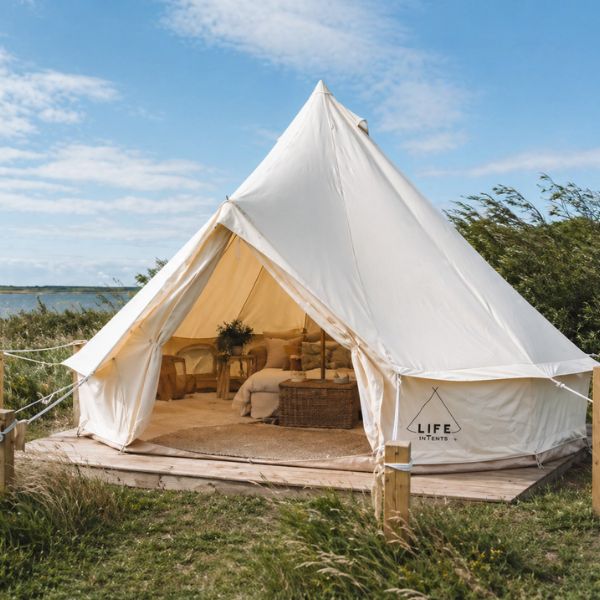
All Life inTents bell tents are waterproof and can be enjoyed in the rain or sunshine - even snow and high winds, too - and come in a variety of sizes and styles. Visit our online canvas tent shop to browse through our collection of quality canvas bell tents.

Related Resources

Campout Continued - Summer Tent Staycation
At Life inTents HQ, we have heard a few stories through the years of happy campers extending their cAt Life inTents HQ, we have heard a few stories through the years of happy campers extending their campout experience, on purpose and on accident, by keeping their tent up in their backyard. No matter the reason, the overall experience appears to have the same theme: extended vibrant nature night-sounds, screen-free game time, laughs, and the occasional dance party. Read on to hear a first-hand interview from a family of four!
How Do Bell Tents Handle Wind? What to Know Before You Set Up
Canvas bell tents are loved for their roomy interiors, classic shape, and comfortable glamping feel.Bell tents can handle wind well when properly set up. Learn how shape, staking, guy line tension, and long-term anchoring all affect wind performance.